Q + A with VLA’s New Executive Director, Alistair Deakin
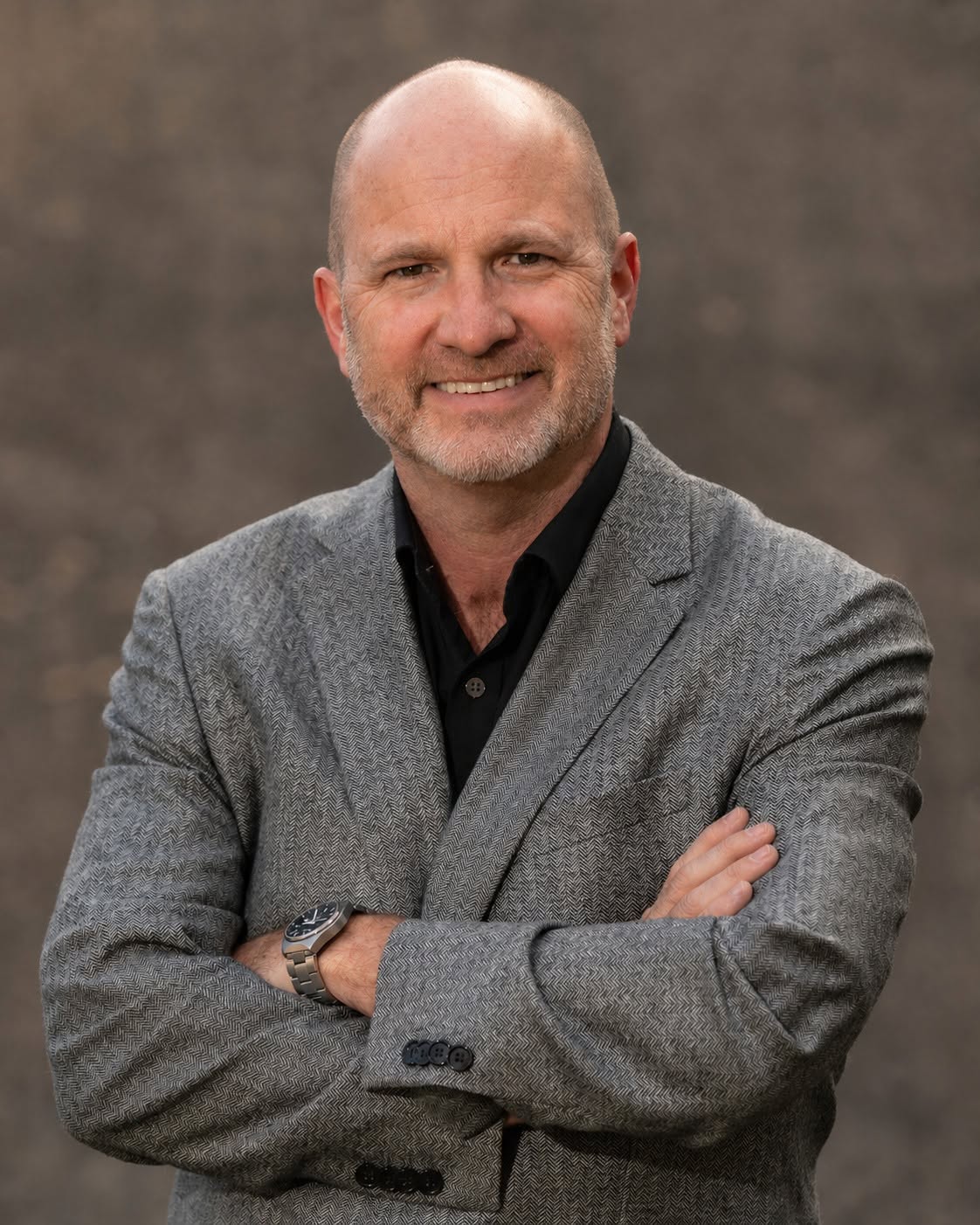 In April 2026, the Board of Trustees of Vermont Legal Aid were pleased to announce that Alistair Deakin had accepted the position of executive director after a competitive national search. Mr. Deakin grew up in England and earned his law degree from Emory University in Atlanta, Georgia. A seasoned executive, he brings more than 25 years of leadership experience across civil justice, human services, public policy, and mission-driven organizations. On his two-month anniversary, Bessie Weiss, former interim director, sat down with Alistair to discuss his path to Vermont Legal Aid and his plans for the organization’s future. The interview has been edited for space and clarity.
You are from England. Can you tell me what brought you to the United States for law school?
One of the first books I remember reading was “To Kill a Mockingbird,” and it planted in me an early sense of the importance of civil rights. Atticus Finch was an important figure for me because he stood up for vulnerable people, regardless of the cost. That idea influenced what I chose to study as an undergraduate. I started out in economics because I wanted to understand how systems create stronger communities—or, conversely, how they harm vulnerable ones. In my final year, I became roommates with American students who were preparing for law school. Watching them go through that process opened up a path that might be possible. I realized I could go to law school, pair my economics background with a legal education and become a civil rights lawyer. I borrowed their LSAT book, took the test in London, and won a scholarship to come to the United States to pursue that goal.
How would you describe your career up to now?
I would describe my career as one in which somehow the right door has opened at the right time. Each stage of learning and experience has led to the next. If you look at my résumé, it may not seem as if there was a grand plan—because there wasn’t. I was simply trying to figure out how to be a helper wherever I was. I began at Atlanta Legal Aid wanting to be an Atticus Finch-type lawyer, but the organization needed help with bank lending and housing programs, including how business practices affected housing availability and access to credit. That was not my original plan, but it became important work. The savings and loan crisis created another wave of opportunity, and I found ways to help that introduced me to investment groups and consultants working on systemic problems of credit availability and business opportunity, particularly in minority communities. That work eventually led me to South Africa as apartheid was ending. At every stage, I was not trying to reach a specific destination; I was looking for ways to help, and each experience taught me something new and opened the next door. Looking back, I believe the story of my career has been leading me here, to Vermont Legal Aid. Everything I have learned about civil rights law, business, government economic development programs, comes together in a way I can be most helpful here and, in this community, and this place, which I chose to live because of how much I want to be here.
What made you decide to apply for this job?
I’ll be honest when I first saw the opportunity, I almost passed it by because I assumed Vermont Legal Aid would want someone who had spent an entire career on the front lines of civil rights law. I remember thinking, “What a great institution. I hope they find someone good for that role.” The next day, I was having coffee with someone who had served in the legislature and was asking where I might be most helpful in Vermont. After hearing about the issues I cared about, they said, “Vermont Legal Aid is looking for a new executive director, and I think you would be perfect.” That made me stop and reconsider. I realized I had been ruling myself out because I saw myself more as a CEO or executive director than as a frontline lawyer, I was rejecting myself. But this was a role I would love to serve in, and I thought I could bring a different perspective. I decided to put myself forward, knowing that even if it did not work out, I would meet committed and interesting people doing important civil rights work. Very quickly, I felt affirmed that it was the right decision.
You’ve been ED for two months, what have you learned?
I have learned a lot. I have learned that Vermont Legal Aid is staffed by dedicated, intelligent, and highly skilled professionals. I have learned that Vermont is a community that values justice, opportunity, fairness, and stands for fundamental decency. I have also learned that no organization stands alone; we are part of a larger ecosystem of organizations and leaders who want everyone to succeed. And, of course, I have learned that these are extraordinary times—times that will require more of all of us, including change, creativity, and agility.
Why is Vermont Legal Aid important to Vermont?
Any society thrives only when there is fairness and opportunity for all. Civilizations struggle or fail when they treat some people as less than full participants in society. Fairness is of course a synonym for justice, and justice requires equal access to the courts and the legal system—not just the theoretical right to something, but the real ability to obtain it. For 58 years, Vermont Legal Aid has been the critical institution standing in the gap between Vermont’s vulnerable populations and the systems that affect their lives. That was true 58 years ago, and I believe it is just as true today, if not more so, as society becomes increasingly divided between those who have resources and those who do not.
What challenges and opportunities do you see ahead?
We are living through an extraordinary time. The current federal administration is deeply adverse to civil rights, justice, fairness, and full participation for all. As we approach the nation’s 250th anniversary, the principles of equal protection under the law and the values embedded in the 14th Amendment are under as serious an attack as they have ever been. It’s an extraordinary time and it’s a time to get busy deciding that what created this nation is still important and worth working for. So, because of this time it’s meant that the funding streams Vermont Legal Aid has relied on are being reduced or eliminated, and the State of Vermont is facing its own budget pressures. At the same time, Vermont Legal Aid has not historically relied heavily on private support or other diversified funding sources. That creates real challenges, but also an opportunity to build greater resilience. Since becoming executive director, I have seen private individuals, elected officials, and community leaders begin to rally around our work. I believe we can build a broader base of support so Vermont Legal Aid is truly by the people and for the people. We also need to show that our role is not only to prevent civil rights abuses, but also to expand access and opportunity. The Office of the Health Care Advocate is a good example: it does not just help prevent harm; it helps people navigate the system, achieve better outcomes, and advocate for policies that benefit all Vermonters. We do similar work in housing and economic rights. Vermont Legal Aid can be part of the solution, not only an organization of last resort. So, it’s a challenging time. We have to get creative about the money, we have to be creative about our support, and we have to be creative about our solutions.
What are your priorities for the coming year?
My priorities for the coming year are to build stronger collaborations with other civil rights organizations and to help shape practical solutions with the legislature and government partners, particularly around housing and long-term care.
More broadly, my goal is to strengthen Vermont Legal Aid’s resilience and sustainability, bring in more champions and collaborative partners, and position the organization as an innovation and solutions partner for anyone working to help vulnerable Vermonters participate fully in our society.
Why should individual Vermonters care about Vermont Legal Aid?
Vermonters should care because I believe we all want to live in a society that is fair, where everyone has the opportunity to participate and people are willing to help one another. We see problems such as homelessness, challenges with mental health needs, older Vermonters losing their homes to tax liens, and the need to ensure that nursing homes are safe and well run for the vulnerable Vermonters who reside there. Vermont Legal Aid stands in the gap—not only to prevent abuses, but also to make opportunity real for everyone. We live in an incredibly beautiful place, in communities that work well for many of us. Everyone should care that there is an organization working to make sure those communities are fair for all. Fairness is not only about having rights; it is about having access to exercise those rights. Vermont Legal Aid’s attorneys and staff understand that difference and work on both fronts.
Thoughts on the World Cup?
Well, football is, of course, the beautiful game. As you might know, from early on in my life, I loved the game and supported one particular team, Manchester City. What I love about it is it’s available to all, and it’s the most played game in the world. All you need is a ball and throw a couple of t-shirts on the ground for goal posts in a park or a playground, and everybody can play. The World Cup is such an incredible opportunity to meet and mingle with people from around the world, from different cultures, faith experiences, and have a moment of joy. As much as I was worried about this World Cup with the sort of posture that America has taken towards the rest of the world, I think what this World Cup is showing us all is that at the end of the day people are people and people love people. The joy that is evident from different fan groups of different countries sharing their traditions and cultures and songs is just such a positive, so despite FIFA having financial incentives to do things which I don't agree with, despite everything, I think it reminds us that there is real hope for a great future. I have no confidence at all that England will do well. I really am excited to see what the USA can do, and I will be cheering them on until the last kick of the game.